

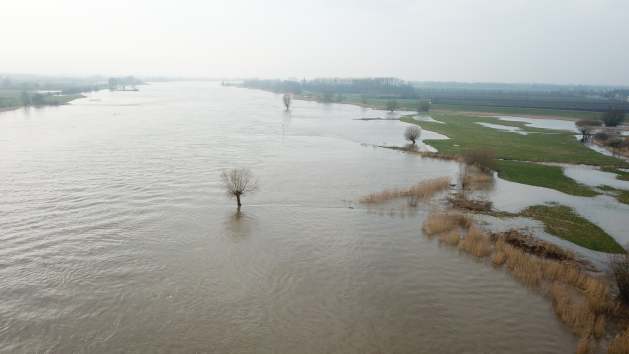
URBANA, Illinois, US, August 27 (IPS) – Around the U.S. Midwest, from Illinois to Indiana to Ohio, critical storms and heavy rains brought about devastating flooding, intensive injury to infrastructure, and the displacement of loads of hundreds of other folks. The historical scale and severity of flooding resulted in the issuance of crisis proclamations for the States of Illinois and Indiana.
Continuously underestimated and overlooked are the devastating and economically expensive penalties of flooding for agriculture, crop production, agroecosystems, and, most significantly, The united states’s Midwest area’s crucial infrastructure: its farmlands which lead the country within the manufacturing of primary plants, together with corn and soybeans, jointly contributing to the United States agriculture sector that is valued at $1.5 trillion.
This wishes to switch. Policymakers should take note of flooding and acknowledge it as a significant danger to American agriculture, with devastating affects on The united states’s meals delivery, farm earning, and nationwide meals safety. Moreover, evidence presentations that the affects of flooding on agriculture are related to these of drought, making a focal point on flooding much more pressing.
5 causes stand out as to why policymakers should take note of intensifying flooding occasions within the Midwest and their penalties for Midwestern agriculture.
First, the U.S. Midwest area is central and resolution of the American Country’s meals and effort programs. In 2024, Illinois, Iowa, and Minnesota on my own produced more than half of the country’s corn and soybeans. Moreover, the significance of Midwest grown plants like corn extends past meals and cattle feed. Knowledge proof presentations that over 40% of U.S. grown corn has been used for ethanol production. When flooding disrupts Midwestern agriculture, the consequenses can succeed in past our meals device and into The united states’s power programs.
2nd, flooding now not simplest threatens crop manufacturing, but it surely additionally negatively affects soil, soil functions, quality and numerous quantity soil residing species together with earthworms, and beneficial soil microbes, that are foundational substances to resilient agricultural manufacturing and functioning agroecosystems. Those consequenses can persist long after flooding waters have receded, doubtlessly affecting crop enlargement and productiveness in next seasons.
Third, flooding imposes prices at the insurance coverage business and different stakeholders supporting Midwest agriculture. From 1989 to 2020, excess moisture was the fastest-growing cause of loss reported to the USDA Possibility Control Company, expanding in 97 p.c of the counties reporting, whilst overall inflation-adjusted crop insurance coverage indemnities rose 374 p.c.
Of the $21.94 billion in crop and rangeland losses in 2023, just about $10 billion used to be now not lined by means of RMA methods, and excessive precipitation, flooding, and hurricanes accounted for $3.99 billion of the entire. Those prices additionally have an effect on the companies that delivery plants: when flooding disrupts roads, rails, and rivers serving native grain elevators, those elevators pay farmers about 24 cents less per bushel for corn and 32 cents much less consistent with bushel for soybeans.
Fourth, our fashions are maximum assured that spring precipitation will increase by ~25-50% by means of the overdue century. Then again, single-day excessive precipitation occasions and extra summer season precipitation are much less predictable; one such event was the recent flash flooding across the Midwestern corridor this August.
That is particularly relating to for the reason that plants are within the reproductive level and with reference to harvest, when farmers have already incurred the prices of this season’s plants and plants could have been suffering from rainy soil previous within the season.
Waterlogging at reproductive levels has been estimated globally to reduce yields by 41.9 percent, when put next with 34.8 p.c at vegetative levels. Fields already wired by means of rainy soils previous within the season could also be broken by means of each occasions. The loss in crop yields may well be catastrophic for an already vulnerable sector.
5th, present insurance policies aren’t preserving tempo with the converting timing of flooding occasions. Despite the fact that the US Division of Agriculture has installed position a number of Federal methods to help farmers, together with prevented planting coverage, disaster and conservation assistance, and crop insurance, and continues to update those methods, many of those paintings perfect for flooding that occurs early within the rising season moderately than for flooding that devastates established plants later within the rising season.
The hot flooding occasions came about in August, when plants together with corn and soybeans are neatly established, and there’s an pressing want for policymakers to re-examine current insurance policies to be sure that farmers are protected against manufacturing losses, source of revenue disruptions, and different financial prices that stand up when flooding happens overdue within the season.
American policymakers can’t manage to pay for to put out of your mind or underestimate the intensive, devastating affects of flooding on agriculture and the stakeholders who give a boost to the rural sector.
The effects of flooding lengthen a ways past broken roads and infrastructure. They succeed in The united states’s farmlands, the soul of The united states’s meals delivery, a sector already suffering from rising fuel costs and fertilizer shortages, and could also be compounded by means of supply-chain disruptions brought about by means of flooding, as in 2019.
Policymakers should grab the chance to reconsider whether or not current insurance policies and up to date investments, together with the $700 million pilot program to support regenerative agriculture practices, can lend a hand the Midwest area and its farmlands meet the demanding situations caused by means of expanding flooding and different critical climate occasions. The place insurance policies fall quick, coverage makers should create new ones. Time is of essence.
Esther Ngumbi, PhD, is an Affiliate Professor within the Division of Entomology on the College of Illinois Urbana Champaign.
Christy Gibson, PhD, is an Illinois Prominent Postdoctoral Pupil within the Division of Crop Sciences on the College of Illinois Urbana-Champaign, the place she research how floods and droughts reshape farming programs and the ecosystems that maintain them
© Inter Press Provider (20260827133646) — All Rights Reserved. Original source: Inter Press Service


