

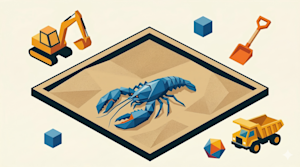
NanoClaw, the open-source AI agent platform created by way of Gavriel Cohen, is partnering with the containerized building platform Docker to let teams run agents inside Docker Sandboxes, a transfer geared toward one of the vital greatest stumbling blocks to venture adoption: the best way to give brokers room to behave with out giving them room to wreck the programs round them.
The announcement issues as a result of the marketplace for AI brokers is moving from novelty to deployment. It’s now not sufficient for an agent to jot down code, solution questions or automate a job.
For CIOs, CTOs and platform leaders, the more difficult query is whether or not that agent can safely hook up with reside information, adjust information, set up programs and perform throughout industry programs with out exposing the host system, adjoining workloads or different brokers.
That’s the drawback NanoClaw and Docker say they’re fixing in combination.
A safety argument, now not only a packaging replace
NanoClaw introduced as a security-first choice within the hastily rising “claw” ecosystem, the place agent frameworks promise vast autonomy throughout native and cloud environments. The mission’s core argument has been that many agent programs depend too closely on software-level guardrails whilst working too with reference to the host system.
This Docker integration pushes that argument down into infrastructure.
“The partnership with Docker is integrating NanoClaw with Docker Sandboxes,” Cohen stated in an interview. “The preliminary model of NanoClaw used Docker packing containers for keeping apart every agent, however Docker Sandboxes is the right kind enterprise-ready answer for rolling out brokers securely.”
That development issues since the central factor in venture agent deployment is isolation. Brokers don’t behave like conventional programs. They mutate their environments, set up dependencies, create information, release processes and hook up with out of doors programs. That breaks lots of the assumptions underlying peculiar container workflows.
Cohen framed the problem in direct phrases: “You wish to have to release the total attainable of those extremely succesful brokers, however you don’t need safety to be in keeping with accept as true with. You need to have remoted environments and tough limitations.”
That line will get on the broader problem dealing with enterprises now experimenting with brokers in production-like settings. The extra helpful brokers develop into, the extra get entry to they want. They want equipment, reminiscence, exterior connections and the liberty to take movements on behalf of customers and groups. However every acquire in capacity raises the stakes round containment. A compromised or badly behaving agent can’t be allowed to spill into the host atmosphere, disclose credentials or get entry to some other agent’s state.
Why brokers pressure typical infrastructure
Docker president and COO Mark Cavage stated that truth compelled the corporate to reconsider one of the assumptions constructed into usual developer infrastructure.
“Basically, we needed to trade the isolation and safety style to paintings on the planet of brokers,” Cavage stated. “It appears like customary Docker, however it’s now not.”
He defined why the outdated style now not holds. “Brokers smash successfully each style we’ve ever identified,” Cavage stated. “Bins suppose immutability, however brokers smash that on the first actual name. The very first thing they wish to do is set up programs, adjust information, spin up processes, spin up databases — they would like complete mutability and a complete system to run in.”
That may be a helpful framing for venture technical decision-makers. The promise of brokers isn’t that they behave like static utility with a chatbot entrance finish. The promise is that they are able to carry out open-ended paintings. However open-ended paintings is strictly what creates new safety and governance issues. An agent that may set up a package deal, rewrite a report tree, get started a database procedure or get entry to credentials is extra operationally helpful than a static assistant. It is usually extra bad whether it is working within the improper atmosphere.
Docker’s solution is Docker Sandboxes, which use MicroVM-based isolation whilst keeping acquainted Docker packaging and workflows. In step with the corporations, NanoClaw can now run inside of that infrastructure with a unmarried command, giving groups a extra protected execution layer with out forcing them to revamp their agent stack from scratch.
Cavage put the price proposition it seems that: “What that will get you is a miles more potent safety boundary. When one thing breaks out — as a result of brokers do dangerous issues — it’s really bounded in one thing provably protected.”
That emphasis on containment moderately than accept as true with strains up intently with NanoClaw’s authentic thesis. In previous protection of the mission, NanoClaw was once located as a leaner, extra auditable choice to broader and extra permissive frameworks. The argument was once now not simply that it was once open supply, however that its simplicity made it more uncomplicated to reason why about, protected and customise for manufacturing use.
Cavage prolonged that argument past any unmarried product. “Safety is protection intensive,” he stated. “You wish to have each layer of the stack: a protected basis, a protected framework to run in, and protected issues customers construct on most sensible.”
This is more likely to resonate with venture infrastructure groups which might be much less desirous about style novelty than in blast radius, auditability and layered keep watch over. Brokers would possibly nonetheless depend at the intelligence of frontier fashions, however what issues operationally is whether or not the encircling gadget can take in errors, misfires or antagonistic habits with out turning one compromised procedure into a much broader incident.
The venture case for plenty of brokers, now not one
The NanoClaw-Docker partnership additionally displays a broader shift in how distributors are starting to take into accounts agent deployment at scale. As a substitute of 1 central AI gadget doing the entirety, the style rising here’s many bounded brokers running throughout groups, channels and duties.
“What OpenClaw and the claws have proven is the best way to get super worth from coding brokers and general-purpose brokers which might be to be had lately,” Cohen stated. “Each staff goes to be managing a staff of brokers.”
He driven that concept additional within the interview, sketching a long run nearer to organizational programs design than to the shopper assistant style that also dominates a lot of the AI dialog. “In companies, each worker goes to have their non-public assistant agent, however groups will arrange a staff of brokers, and a high-performing staff will arrange loads or hundreds of brokers,” Cohen stated.
That may be a extra helpful venture lens than the standard shopper framing. In an actual group, brokers usually are hooked up to distinct workflows, information retail outlets and communique surfaces. Finance, beef up, gross sales engineering, developer productiveness and inside operations would possibly all have other automations, other reminiscence and other get entry to rights. A protected multi-agent long run is dependent much less on generalized intelligence than on limitations: who can see what, which procedure can contact which report gadget, and what occurs when one agent fails or is compromised.
NanoClaw’s product design is constructed round that more or less orchestration. The platform sits on most sensible of Claude Code and provides power reminiscence, scheduled duties, messaging integrations and routing good judgment so brokers may also be assigned paintings throughout channels akin to WhatsApp, Telegram, Slack and Discord. The discharge says it will all be configured from a telephone, with out writing customized agent code, whilst every agent stays remoted inside of its personal container runtime.
Cohen stated one sensible function of the Docker integration is to make that deployment style more uncomplicated to undertake. “Other folks will be capable to cross to the NanoClaw GitHub, clone the repository, and run a unmarried command,” he stated. “That can get their Docker Sandbox arrange working NanoClaw.”
That ease of setup issues as a result of many venture AI deployments nonetheless fail on the level the place promising demos must develop into solid programs. Safety features which might be too laborious to deploy or care for steadily finally end up bypassed. A packaging style that lowers friction with out weakening limitations is much more likely to continue to exist inside adoption.
An open-source partnership with strategic weight
The partnership may be notable for what it’s not. It’s not being located as an unique business alliance or a financially engineered venture package.
“There’s no cash concerned,” Cavage stated. “We discovered this in the course of the basis developer neighborhood. NanoClaw is open supply, and Docker has an extended historical past in open supply.”
That can support the announcement moderately than weaken it. In infrastructure, probably the most credible integrations steadily emerge as a result of two programs have compatibility technically ahead of they have compatibility commercially. Cohen stated the connection started when a Docker developer suggest were given NanoClaw working in Docker Sandboxes and demonstrated that the mix labored.
“We have been ready to place NanoClaw into Docker Sandboxes with out making any structure adjustments to NanoClaw,” Cohen stated. “It simply works, as a result of we had a imaginative and prescient of ways brokers will have to be deployed and remoted, and Docker was once enthusiastic about the similar safety issues and arrived on the similar design.”
For venture consumers, that beginning tale indicators that the combination was once now not compelled into life by way of a go-to-market association. It suggests authentic architectural compatibility.
Docker may be cautious to not forged NanoClaw as the one framework it’s going to beef up. Cavage stated the corporate plans to paintings extensively around the ecosystem, at the same time as NanoClaw seems to be the primary “claw” integrated in Docker’s reputable packaging. The implication is that Docker sees a much broader marketplace alternative round protected agent runtime infrastructure, whilst NanoClaw positive factors a extra recognizable venture basis for its safety posture.
The larger tale: infrastructure catching as much as brokers
The deeper importance of this announcement is that it shifts consideration from style capacity to runtime design. That can be the place the actual venture festival is heading.
The AI business has spent the remaining two years proving that fashions can reason why, code and orchestrate duties with rising sophistication. The following section is proving that those programs may also be deployed in tactics safety groups, infrastructure leaders and compliance homeowners can reside with.
NanoClaw has argued from the beginning that agent safety can’t be bolted on on the software layer. Docker is now creating a parallel argument from the runtime facet. “The arena goes to desire a other set of infrastructure to catch as much as what brokers and AI call for,” Cavage stated. “They’re obviously going to get increasingly self sustaining.”
That would grow to be the central tale right here. Enterprises don’t simply want extra succesful brokers. They want higher packing containers to place them in.
For organizations experimenting with AI brokers lately, the NanoClaw-Docker integration provides a concrete image of what that field may appear to be: open-source orchestration on most sensible, MicroVM-backed isolation beneath, and a deployment style designed round containment moderately than accept as true with.
In that sense, that is greater than a product integration. It’s an early blueprint for the way venture agent infrastructure would possibly evolve: much less emphasis on unconstrained autonomy, extra emphasis on bounded autonomy that may continue to exist touch with actual manufacturing programs.


