

Of the 234 million school-age kids suffering from battle globally, 85 million kids are totally out of faculty.
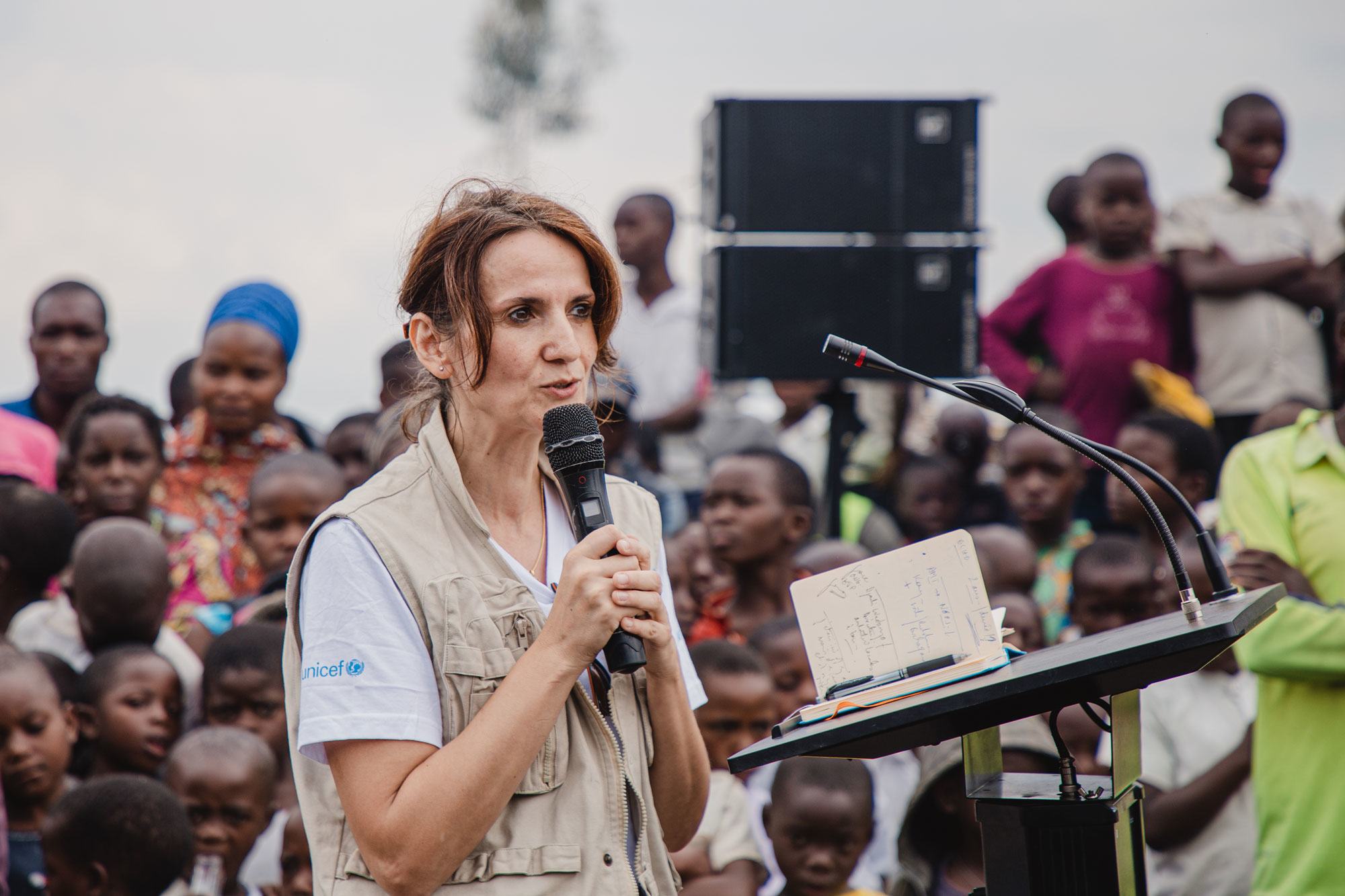
The figures are “unheard of,” Helena Murseli, who leads the UN Youngsters’s Fund’s (UNICEF) World Schooling in Emergencies crew, informed UN Information.
© UNICEF/Jospin Benekire
UNICEF’s Helena Murseli.
“Those aren’t remoted incidents. They’re a part of a world development of escalating battle that has effects on kids’s proper to be told,” she mentioned.
Early life with out schooling
Within the quick and long-term, the results of lacking out on schooling all over violent crises are critical.
“Schooling is not only lifesaving, it’s additionally life-sustaining and life-changing,” Ms. Murseli emphasized.
“When faculties shut, households additionally lose their anchor. Youngsters leave out the construction, the security, the normalcy that schooling supplies,” she mentioned. “The day by day fact turns into about instant survival, slightly than development a long run for them.”
Ms. Murseli wired that the long-term affects are simply as or much more important. “Schooling breaks cycles of battle and poverty. When complete generations leave out college, international locations lose the human capital wanted for restoration and construction. We chance developing what we name a ‘misplaced era’—kids who develop up figuring out best disaster, with out the abilities or hope to rebuild their society.”
Sudan: The arena’s greatest schooling disaster
When it comes to numbers, Sudan is the arena’s greatest schooling emergency. An estimated 19 million kids are out of faculty, and 90 in step with cent of faculties are closed national because of ongoing violent battle.
To assist cope with this disaster, Ms. Murseli highlighted that over 2.4 million kids have returned to university via greater than 850 UNICEF-run Makanna centres – that means “our area” in Arabic.
UNICEF has additionally supported over 250,000 kids with holistic schooling products and services, offering scholars with water, sanitation, diet and coverage in order that they’re in a position to effectively proceed their research.
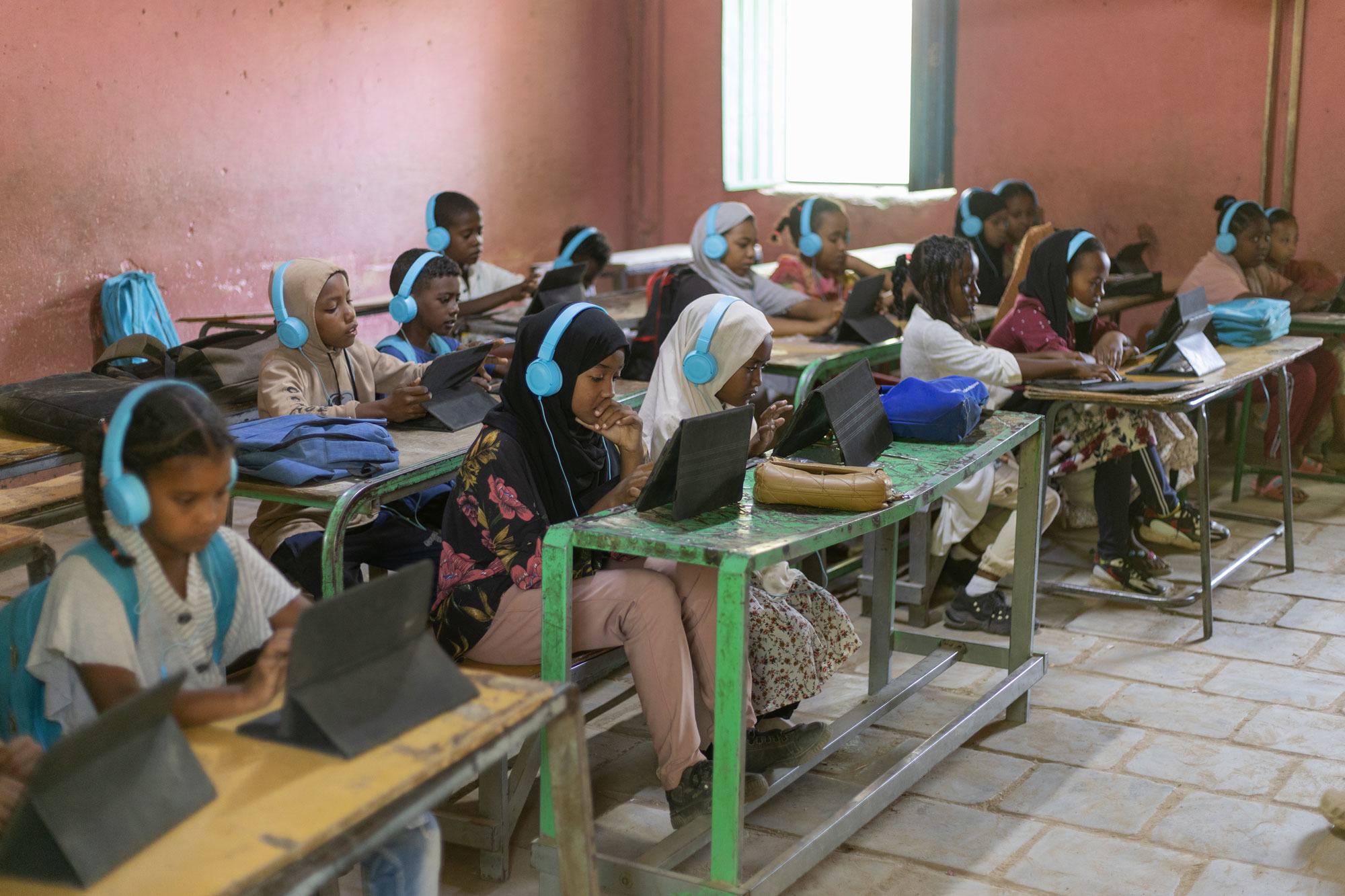
The additionally group utilises solar-powered drugs for schooling, “highest for a rustic with greater than 10 hours of day by day sunshine,” mentioned Ms. Murseli.
© UNICEF/Ahmed Mohamdeen Elfatih
Youngsters in Kassala, Sudan, find out about with the assistance of virtual drugs.
Moreover, a $400 million Transitional Educational Plan led via the UN’s schooling group (UNESCO) goals to revive get right of entry to to schooling and vocational coaching.
Having a look forward, UNICEF’s education support project in Sudan plans to strengthen rather solid states with revealed fabrics and faraway studying gear.
Systematic destruction of faculties in Gaza
The warfare in Gaza and the destruction of 95 in step with cent of instructional infrastructure has left over 660,000 kids out of faculty – the vast majority of Gaza’s school-aged inhabitants.
Many former UN-run faculties are actually getting used as shelters for displaced other people.
A report to the UN Human Rights Council discovered that Israeli forces systematically destroyed schooling infrastructure in Gaza and described those movements as conceivable warfare crimes.
Studying with what’s to be had
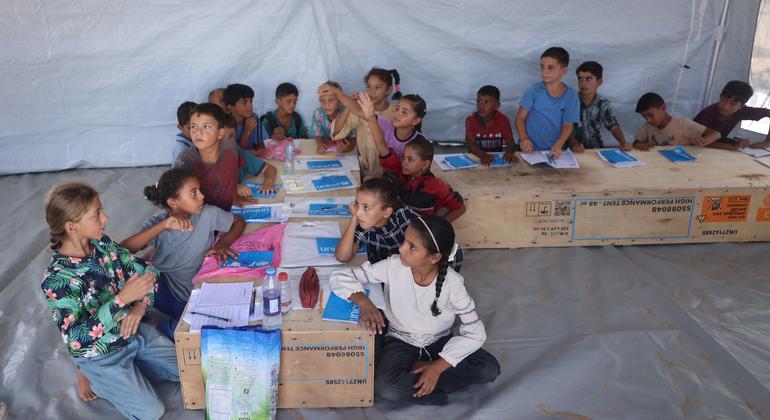
In line with Ms. Murseli and the UN Palestinian refugee agency (UNRWA) greater than 68,000 kids in Gaza had been reached via transient studying areas providing schooling and psychosocial strengthen.
UNICEF could also be recycling pallets into college furnishings and changing equipped bins into tables and chairs.
© UNICEF/Mohammed Nateel
As well as, virtual gear to check literacy and numeracy classes had been equipped to just about 300,000 Palestinian refugee kids.
Ukraine: schooling below fireplace
Inside Ukraine, 5.3 million kids face boundaries to schooling, and round 115,000 are totally out of faculty due to the continued warfare.
With many colleges at the entrance traces both closed or running remotely, over 420,000 kids attend college absolutely on-line, whilst 1 million use a hybrid style.
Then again, ongoing power shortages have lowered get right of entry to to on-line studying to as low as two and a part hours on a daily basis, and in-person college is incessantly disrupted via indiscriminate assaults.
In Russian-controlled spaces of Ukraine, the UN Human Rights Place of business said that government are imposing a militarised, patriotic curriculum and banning the Ukrainian language – movements that violate global regulation, which calls for occupying powers to admire kids’s nationwide identification and schooling.
Catch-up categories and secure areas
UNICEF has established 150 pupil studying centres in frontline spaces and provides twice-weekly catch-up categories in maths and Ukrainian language.
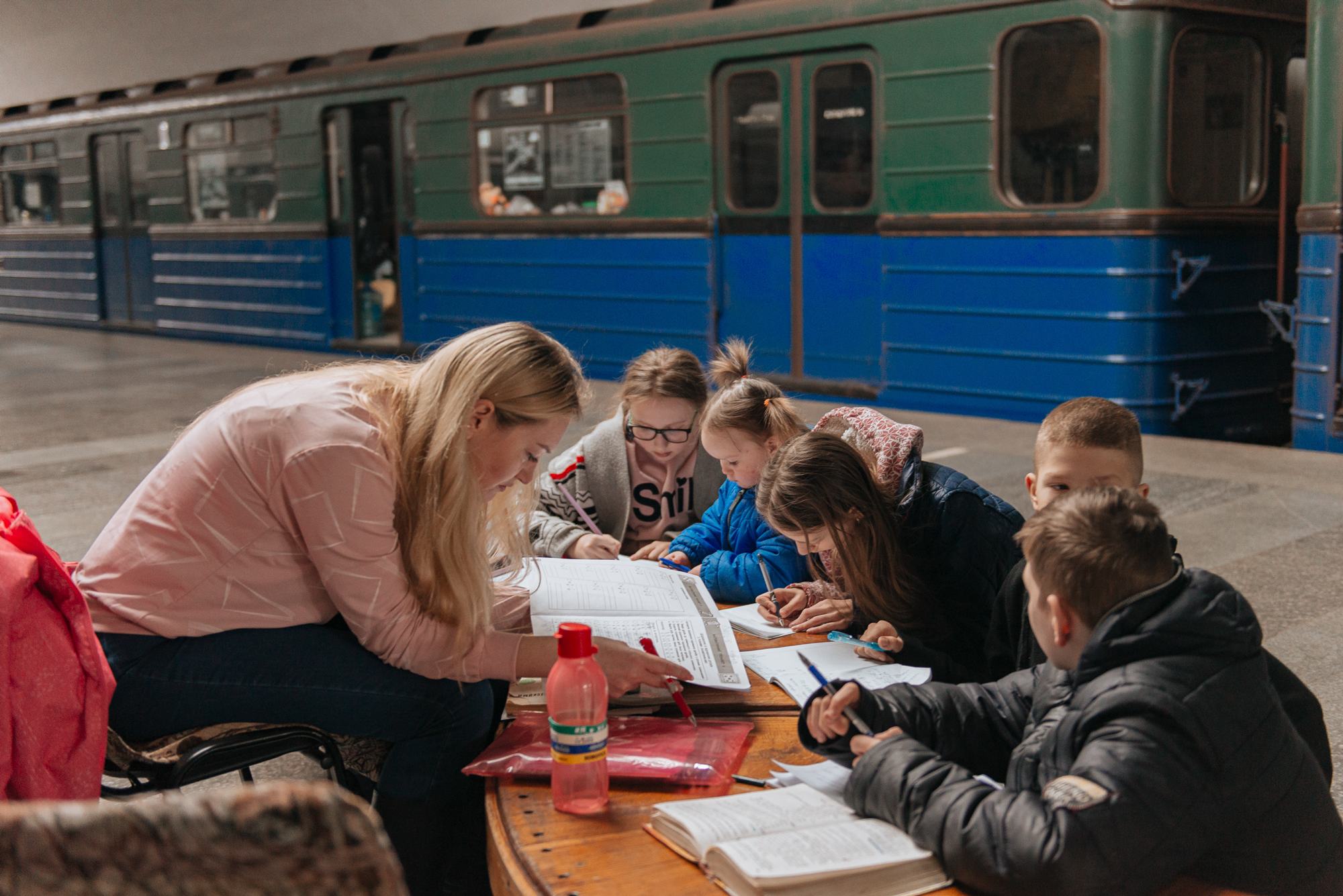
To conform to the placement at the entrance traces, Ms. Murseli additionally highlighted UNICEF’s working of faculties in underground metro methods and bomb shelters.
© UNICEF/Kristina Pashkina
Youngsters find out about in a refuge in Kharkiv metro in Ukraine.
In 2025, the group goals to assist over 500,000 kids around the nation get right of entry to formal schooling and leisure actions.
To extend protection, UN Ukraine has additionally introduced an initiative to create secure shelters for college kids and workforce all over air raids.
The prices of inactivity
As crises deepen and humanitarian investment continues to say no, schooling programmes have confronted dramatic cuts.
Ms. Murseli underscored that as humanitarian investment may drop as much as 45 in step with cent via the tip of this 12 months, “in spite of being households’ best precedence in emergencies, schooling receives best 3 in step with cent of humanitarian help.”
“I feel we’re on the important turning level the place we want pressing prioritisation of schooling and no longer additional cuts,” she mentioned.
Amid rhetoric of a “humanitarian reset” – saving budget via making the humanitarian device simpler – Ms. Murseli emphasized that holistic schooling programmes that supply scholars with the humanitarian assets to thrive are the important thing to withstanding crises and construction within the aftermath.
“We’re speaking about 234 million kids’s long run and in the end, world steadiness and construction. The price of inactivity some distance exceeds the funding had to get each crisis-affected kid studying,” she concluded.


